

How to Maintain a Healthy Lawn During North Carolina’s Spring Growth Surge
Spring in the Sandhills doesn’t ease in gently. One week you’re looking at dormant, straw-colored turf, and the next you’re watching your lawn shoot up two inches overnight. That’s just the nature of spring lawn growth in NC. Warm days, unpredictable rain, and rapidly rising soil temperatures create a perfect storm of fast, aggressive growth that catches a lot of homeowners off guard.
Managing that growth surge well in March and April sets the tone for your entire lawn season. Get ahead of it, and you’ll enjoy thick, healthy turf with strong roots that can handle the heat and drought stress of a Carolina summer. Fall behind, and you’re fighting weeds, uneven growth, and scalped patches for months. Here’s how we recommend navigating it, and how our team at Green Garden Landscaping approaches this critical window each year.
Why Spring Growth in NC Moves So Fast
North Carolina’s Sandhills region sits in a transitional climate zone, warm enough to wake cool-season grasses early, but also home to warm-season turf like bermuda and centipede that explode once soil temps cross the 65°F threshold. By late March, daytime highs in the Sanford and Southern Pines area regularly push into the 60s and 70s, signaling grasses to shift into high gear.
Add in the region’s sandy loam soils, which drain quickly but warm up fast, and you have conditions that reward proactive lawn care and punish delays.

Managing Lawn Growth in March and April: A Step-by-Step Approach
Step 1: Resist the Urge to Mow Too Early, Then Don’t Wait Too Long
One of the most common mistakes we see is homeowners either jumping the gun on their first mow of the season or waiting so long the lawn becomes a jungle. Both scenarios create problems.
Timing your first mow:
- Wait until your grass is actively growing and has reached about one-third above its ideal mowing height
- For bermuda grass, aim to keep it between 1 and 1.5 inches. Centipede does best at 1.5 to 2 inches. Tall fescue should stay around 3 to 3.5 inches
- Avoid mowing when the ground is still soft and wet from overnight rain, as you’ll compact the soil and leave ruts
Once growth kicks in, expect to mow every 5 to 7 days through April. During peak spring surges, some weeks may call for more frequent cuts to avoid taking off more than one-third of the blade at once. That “one-third rule” isn’t just lawn lore. Removing too much at once stresses the plant, exposes the soil to drying out, and opens the door to disease. Our professional lawn mowing services are built around this kind of consistent, schedule-driven approach so your turf never gets ahead of us.
Step 2: Sharp Blades, Clean Cuts
This sounds simple, but it matters more than most people realize. A dull mower blade tears grass rather than cutting it cleanly, leaving ragged tips that turn brown and create entry points for fungal disease, which is a real concern in our humid spring climate. We sharpen our blades regularly throughout the season, and if you’re mowing at home, it’s worth doing the same at least once before spring gets rolling.
Step 3: Spring Fertilization, Timing Is Everything
The best spring fertilization schedule for NC lawns depends on your grass type, but the general principle holds across the board: don’t rush it.
For warm-season grasses like bermuda and centipede:
- Wait until after the last frost risk has passed, typically mid-to-late April in the Sanford and Pinehurst area
- Applying nitrogen too early on a dormant warm-season lawn can stimulate tender growth that gets burned by a late frost
- A balanced slow-release fertilizer applied once green-up is fully underway will fuel healthy, even growth through late spring
For cool-season grasses like tall fescue:
- Spring fertilization should be light. Heavy nitrogen in spring pushes excessive top growth at the expense of root development
- A modest application in early March followed by regular mowing is more beneficial than loading up on fertilizer
- Save the heavier feeding for fall, when fescue does its best growing
If you’d rather leave the timing and product selection to the pros, our lawn fertilization program is designed specifically for NC Sandhills turf types and seasonal conditions.
| Grass Type | Fertilize In Spring? | When to Apply | Notes |
| Bermuda | Yes | Late April to May | After full green-up |
| Centipede | Light application | Late April | Avoid over-fertilizing |
| Tall Fescue | Light application | Early March | Prioritize fall feeding |
| Zoysia | Yes | Late April to May | After soil temps reach 65°F |
Step 4: Get Ahead of Weeds Before They Take Hold
Spring weed control is one area where timing is non-negotiable. Pre-emergent herbicides work by preventing weed seeds from germinating. Once weeds have already sprouted, that window has closed and you’re in reactive mode.
In the NC Sandhills, crabgrass typically begins germinating when soil temperatures hit 55°F for several consecutive days, often as early as late February or early March. If you haven’t applied a pre-emergent by then, you’re already playing catch-up.
Practical weed control tips for spring:
- Apply pre-emergent herbicide in late February to early March for crabgrass prevention
- Don’t overseed and apply pre-emergent at the same time. Pre-emergents will prevent grass seed germination too
- For broadleaf weeds like clover, dandelions, and henbit that have already emerged, spot-treat with a post-emergent herbicide or hand-pull before they set seed
- Keep landscape beds weeded and topped with fresh mulch. Our landscape bed weed control service keeps beds clean all season, and pairing it with a fresh layer from our mulch installation service is one of the best ways to suppress spring weed pressure naturally
Our professional weed control treatments use properly timed applications to protect your turf at the right growth stage, taking the guesswork out of one of spring’s trickiest tasks.
Step 5: Don’t Overlook Edging and Trimming
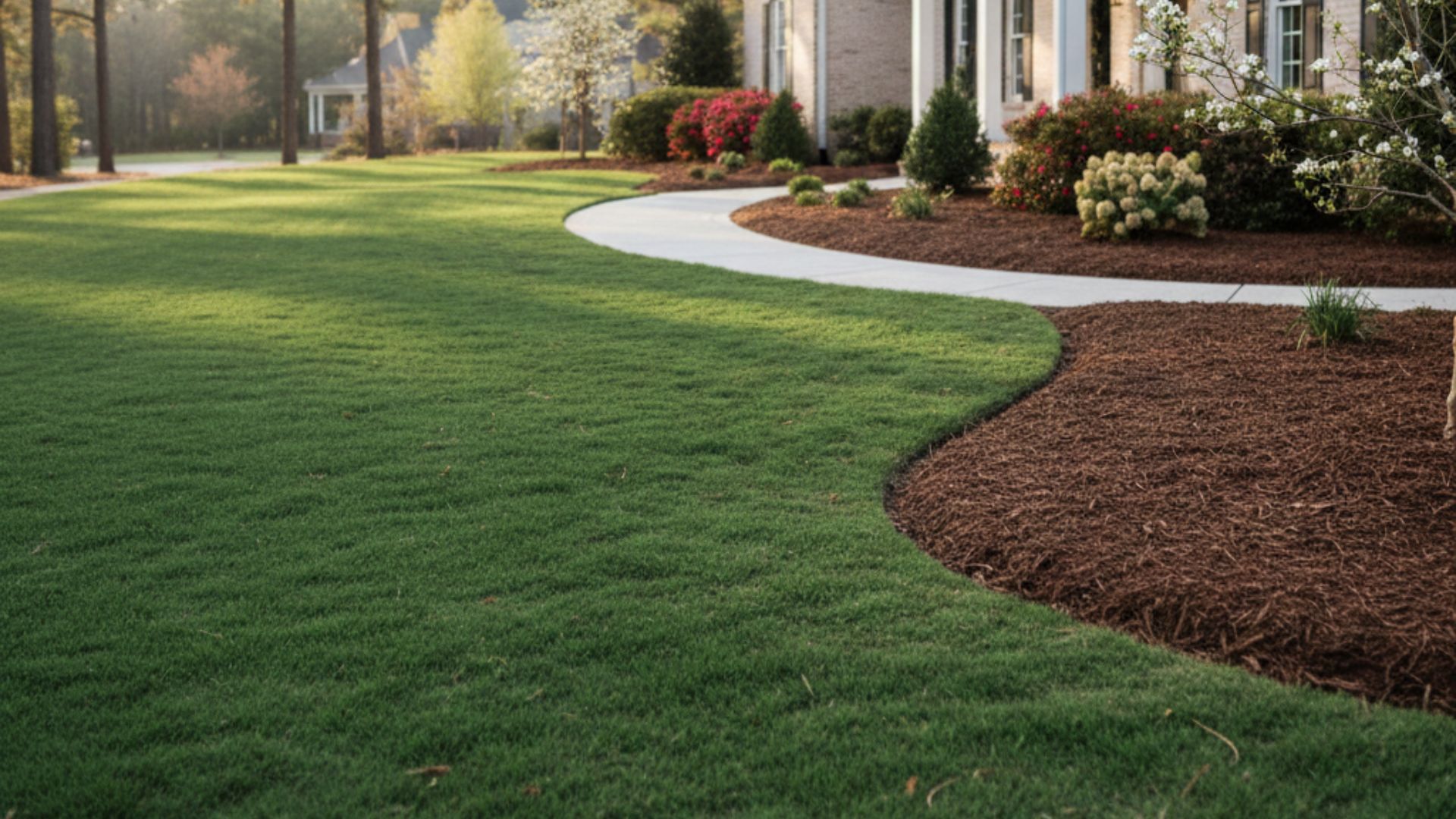
A freshly mowed lawn with overgrown edges just doesn’t look right. Spring is the time to re-establish clean lines along driveways, sidewalks, and landscape beds. In our experience working with homeowners from Cameron to Aberdeen, this single detail often makes the biggest visual difference in overall curb appeal.
We recommend edging every other mow during spring to maintain crisp borders as growth accelerates.
Should You Handle Spring Lawn Care Yourself, or Call In a Pro?
There’s no shame in the DIY route for homeowners who enjoy it and have the time. But spring is the season where mistakes are most costly. Miss your pre-emergent window by two weeks, apply fertilizer at the wrong time, or mow too short during a warm spell, and you can set your lawn back significantly.
Where professional maintenance really pays off:
- Consistent mowing on the right schedule, with no gaps during peak growth
- Properly timed fertilizer and weed control applications based on current soil temps and conditions
- Trained eyes catching early signs of lawn disease or insect pressure before they spread
- One less thing on your plate during a busy spring season
Our spring cleanup and maintenance services are built to handle all of this in one coordinated visit. And if you want to know more about the team behind the work, ourAbout page gives you a clear picture of who we are and how we operate.
Our spring lawn care team in Sanford has been helping Sandhills homeowners and property managers stay ahead of the spring rush since 2009. We know this region’s soil, climate quirks, and grass types well, and we build maintenance programs that take the guesswork entirely off your plate.
Spring Lawn Care Timing
Spring success comes down to one thing more than any other: acting before you need to, not after. Pre-emergents before weeds sprout. Mowing before growth gets away from you. Fertilization at the right growth stage, not just the first warm weekend that feels like spring.
If you’re ready to head into the growing season with a plan and a team that shows up consistently and communicates clearly, we’d love to talk. Reach out to Green Garden Landscaping at 919-444-8321 or visit us at greengardenlandscape.com to learn more about our spring lawn maintenance programs. The season moves fast around here. Let’s make sure your lawn is ready for it.
Frequently Asked Questions
When is the best time to plant trees in the Houston area?
The best time to plant trees in Houston is from late January through April. Planting during this window allows roots to establish in gradually warming soil before intense summer heat arrives. Trees installed in February or March are often better prepared to handle their first summer in Houston’s climate.
What trees grow best in Houston’s climate?
Native and heat tolerant species tend to perform best. Live Oak, Bald Cypress, Yaupon Holly, and Eastern Red Cedar are dependable choices for the greater Houston area. For shade, Southern Magnolia and Live Oak are popular selections. For privacy screening, Eastern Red Cedar and Yaupon Holly provide reliable coverage. Browse our shade trees, ornamental trees, and privacy plantings pages to explore more options.
How do I prepare clay soil for tree planting in the Houston area?
Dig a hole two to three times wider than the root ball to encourage roots to spread outward. Loosen the surrounding soil and mix a light amount of compost into the backfill. Avoid adding gravel to the bottom of the hole, as it can interfere with proper drainage. A wide planting area helps roots expand more easily through Houston’s dense clay soil.
How do I keep a newly planted tree alive through a Houston summer?
Water deeply two to three times per week rather than applying light daily watering. A soaker hose or drip irrigation system provides consistent moisture. Maintain a two to four inch layer of mulch around the base, keeping it a few inches away from the trunk, to retain moisture and moderate soil temperature. Watch for signs of stress such as wilting or yellowing leaves and respond promptly.
Do I need a full landscaping company to have trees professionally installed?
No. A tree focused company like OP Tree Nursery handles tree sales and residential installation without requiring a full landscape renovation. Homeowners can have two to ten trees professionally planted without committing to a larger project, making it a straightforward option for improving their property with quality trees.