
Why Leaf Removal Matters: More Than Just Curb Appeal
Healthy soil. Safer walkways. Stronger turf.

Fall in North Carolina paints a beautiful picture — golden oaks, red maples, and crisp breezes sweeping across the lawn. But as those leaves begin to pile up, they bring more than just color to your yard. Beneath that layer of fall charm, unseen processes begin affecting your soil, grass, and even your property’s safety.
Leaf removal
isn’t just about keeping your yard tidy. It’s about
protecting your lawn’s health, preserving your soil structure, and preventing costly damage
before winter arrives. In other words — it’s one of the most important fall tasks you can do for your landscape.
The Soil Story: What Really Happens Beneath the Leaves
When you let leaves accumulate, the problem goes deeper than what meets the eye. Beneath that blanket, your lawn begins to suffocate.
-
Oxygen and soil life:
A thick layer of leaves traps moisture and blocks airflow. This reduces oxygen in the soil — the very thing roots and
beneficial microbes
depend on. As oxygen drops, beneficial bacteria and earthworms slow down, while disease-causing fungi thrive.
-
Moisture imbalance:
Fallen leaves hold water against the grass crown, promoting shallow roots and higher risk of frost damage. Grass that doesn’t develop
deep roots
during fall struggles to survive cold snaps and has slower recovery in spring.
-
pH and toxins:
Certain leaves, like walnut or eucalyptus, contain allelopathic compounds — natural chemicals that can prevent seed germination or harm tender grass roots.
PRO TIP:
If the ground feels soft, soggy, or spongy underfoot, your soil is already oxygen-starved. Clean up the leaf layer before rainstorms compact it further.
How Much Is Too Many Leave
s?
Not every leaf on your lawn needs to be removed immediately — but knowing when “a few leaves” becomes “too many” makes all the difference.
Here’s a simple rule of thumb for North Carolina lawns:
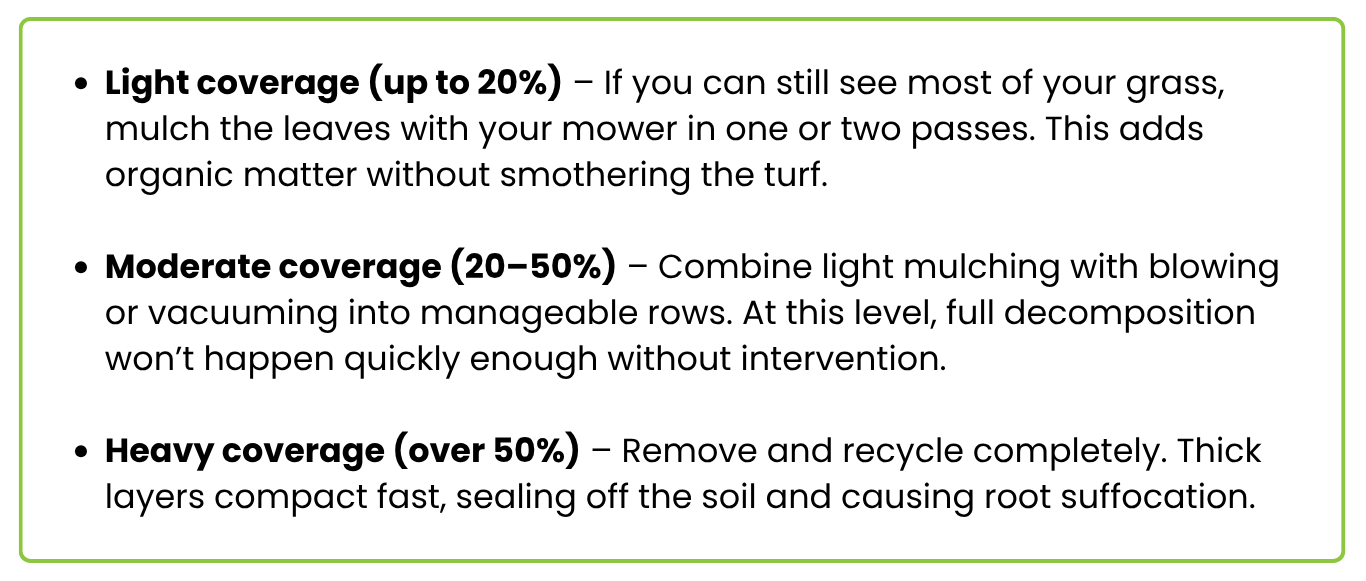
Quick visual test:
If you can’t see grass tips every one to two inches, it’s time to stop mulching and start removing.
Leaving too many leaves doesn’t just affect your grass — it also creates a microclimate perfect for pests, fungus, and weeds.
Safety and Compliance: Avoid Hidden Hazards
Beyond lawn health, accumulated leaves bring real safety and property concerns — especially as fall rains pick up.
Keeping your yard clean isn’t just about looks — it’s part of being a responsible homeowner and steward of your community.
Smart, Sustainable Leaf Disposal
Once the leaves are off your lawn, what you do with them matters just as much as the cleanup itself. At Green Garden Landscaping, we promote
eco-conscious disposal
that benefits your soil and the environment.
1. On-Site Mulching
Fine-mulch small quantities (¼ inch or less) around shrubs or trees — not directly on grass. This keeps the soil insulated and nourished through winter.
2. Composting
Combine three parts dry leaves with one part “green” materials like food scraps, fresh clippings, or coffee grounds. Turn every 10–14 days to aerate and speed up decomposition. Within a few months, you’ll have nutrient-rich compost ready for spring gardens.
3. Professional Haul-Away
For large properties or wooded lots, our professional crews collect and transport leaves to certified composting sites — ensuring nothing ends up in landfills.

A Cleanup Plan That Matches Your Landscape
Every property has different needs depending on tree density, wind exposure, and terrain. For most lawns in North Carolina,
cleanup frequency
should be adjusted throughout the fall to keep debris from piling up and compacting the soil.
From
October through November
, when leaf fall is at its peak, lawns with light tree coverage typically need one cleanup per week to stay clear. Properties with moderate coverage benefit from two cleanups per week or after every major storm, ensuring leaves don’t have time to mat down. For heavily wooded properties, two to three visits each week are ideal, followed by a final deep clean before the first frost. This schedule keeps leaves from decomposing in place and creating soggy buildup that can damage turf.
By
December and January
, it’s time for one last thorough sweep to remove any remaining leaf mats, clear gutters, and tidy edges. Doing so prevents compacted debris from freezing into thick layers or trapping moisture that can stress roots through winter. A well-timed cleanup plan doesn’t just make maintenance easier — it also prepares your soil for upcoming winter treatments like aeration, fertilization, and irrigation system shutdowns, setting your lawn up for a healthier start in spring.
Root-Level Rewards: Why Clean Turf Recovers Faster
When your lawn is clear of debris, sunlight and nutrients can reach the soil freely — and that means stronger roots, healthier grass, and less spring recovery time.
-
Better oxygenation:
Clean soil supports
deeper root systems
that resist drought and heat stress.
-
Fewer diseases:
Removing leaf litter eliminates moisture traps where fungi like snow mold and brown patch thrive.
-
Improved nutrient absorption:
Fertilizers and soil treatments
can penetrate directly into the root zone.
Earlier green-up:
Lawns cleared in fall rebound faster and greener in early spring — no more waiting for “dead patches” to catch up.

Professional Care That Pays Off
Skipping leaf removal might seem like saving time — but it’s a short-term convenience that leads to long-term damage. By spring, you’ll spend far more time and money restoring what a few cleanups could’ve prevented.
-
Prevent
dead patches and
weed invasion
-
Eliminate
safety hazards on driveways and walkways
-
Protect
soil health and prevent compaction
-
Save
on re-seeding, topdressing, and disease treatments
At
Green Garden Landscaping
, we make leaf removal simple, sustainable, and stress-free.